Why We Insist on Indigenous Seedlings for Every Planting Day
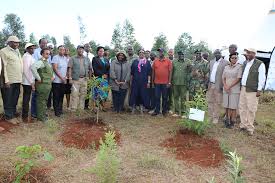
Every planting day, someone asks why we do not simply plant whatever grows fastest or looks most attractive along a street. The honest answer is that fast growth and good looks are not the same as survival, and survival is the only metric that actually matters once our team has moved on to the next site.
Indigenous species like Croton, Markhamia and various acacias have spent thousands of years adapting to Nairobi's rainfall patterns, soil types and dry spells. They need less watering after establishment, tolerate poor soil better, and support the insects and birds that ornamental imports simply do not attract.
There is also a maintenance argument. A tree that needs constant watering to survive a dry season is a tree that depends on someone remembering to water it. Given how thin volunteer time is spread across Donholm's many streets, we would rather plant something that can look after itself once it is past its first rainy season.
None of this means ornamental trees are banned from every compound; a household planting for their own garden can choose what they like. But for the street plantings and green corridor work covered by our tree planting and greening programme, indigenous species remain the default, and our nursery team collects and propagates seed from local specimens specifically to keep that supply going.
The result, four years in, is a set of street trees that have mostly outgrown the need for our attention, freeing up volunteer time for the next site instead of nursing the last one along.
Back to Blog